
AI-Powered Document Intake for Procurement
Reduced initial opportunity review from approximately 25 hours of manual review to approximately 10 minutes of AI-assisted extraction and structured validation.
Role
Senior Product Designer (Individual Contributor)
Timeline
Aug 2025 – Feb 2026
Type
B2B / Web Application
Impacts
Reduced manual document review time from 25 hours to 10 minutes through AI-powered extraction
Converted unstructured documents into decision-ready data, eliminating manual parsing
Scaled workflows to 200K+ executions per quarter across high-volume bids
Accelerated bid turnaround, improving supplier competitiveness and win rates
Contribution
- Led the design of an AI-powered document intake and extraction system
- Defined end-to-end workflow: Upload → AI parsing → Validation → Structured output
- Designed UX for human-in-the-loop validation to ensure accuracy and trust
- Collaborated closely with engineering to integrate AI models into product workflows
- Used AI tools (Claude) to accelerate prototyping and iteration cycles
Overview
Suppliers rely on fragmented documents—drawings, specs, and emails—to prepare bids.
Reviewing and extracting relevant information often takes tens of hours per project, slowing down decision-making and reducing competitiveness.
Problem
Suppliers were spending tens of hours per project manually reviewing documents to:
- Extract relevant scope details
- Validate information across sources
- Prepare accurate bids under tight deadlines
This created:
Slow turnaround times
High cognitive load
Lost bid opportunities
Insights
The problem wasn't access to data—it was the time required to interpret it.
Live session with customer during the initial research
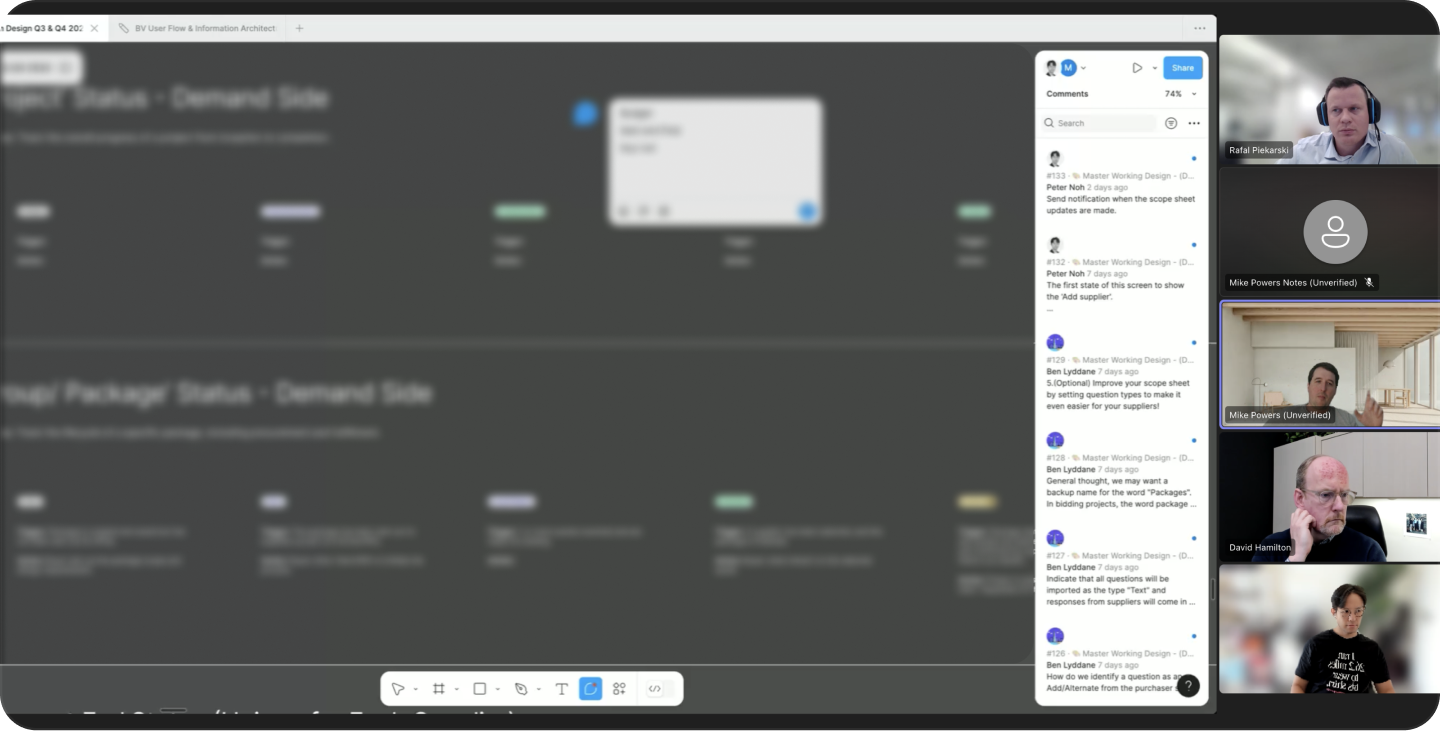
Users were overwhelmed by:
- Large volumes of unstructured documents
- Manual cross-referencing across sources
- High effort to validate critical information
- Users normally deals with project documents with 100+ pages (in average) to extract the engineering requirements or specifications in order to evaluate the bidding decision
- There is no centralized ways to manage the project bidding process
- The project files are unorganized to associate with the projects
This shifted the product direction from:
“Document management” → to “Decision acceleration through AI-structured data”
Based on the user research from external surveys or interviews with project managers, key customers from



Process
Brainstorming
- Conducted brainstorming sessions with suppliers and internal GTM teams
- Identified key bottleneck: manual document review across hundreds of pages
Customers struggle to review the average of 300+ pages of project related documents and make a quick decision on the bidding process
Workflow Ideations
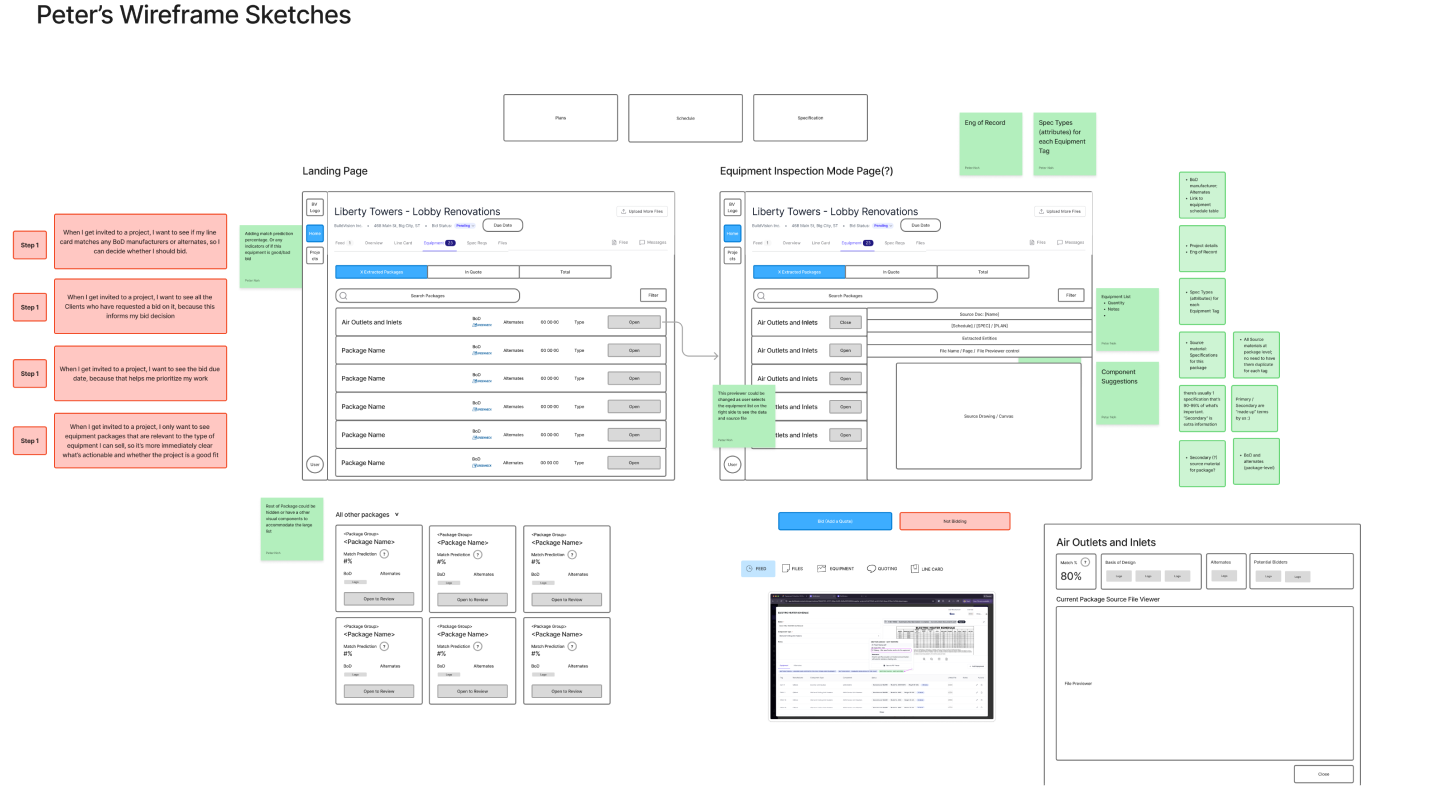
- Mapped procurement lifecycle and document flow in wire framing format
- Identified opportunity to automate intake → extraction → validation
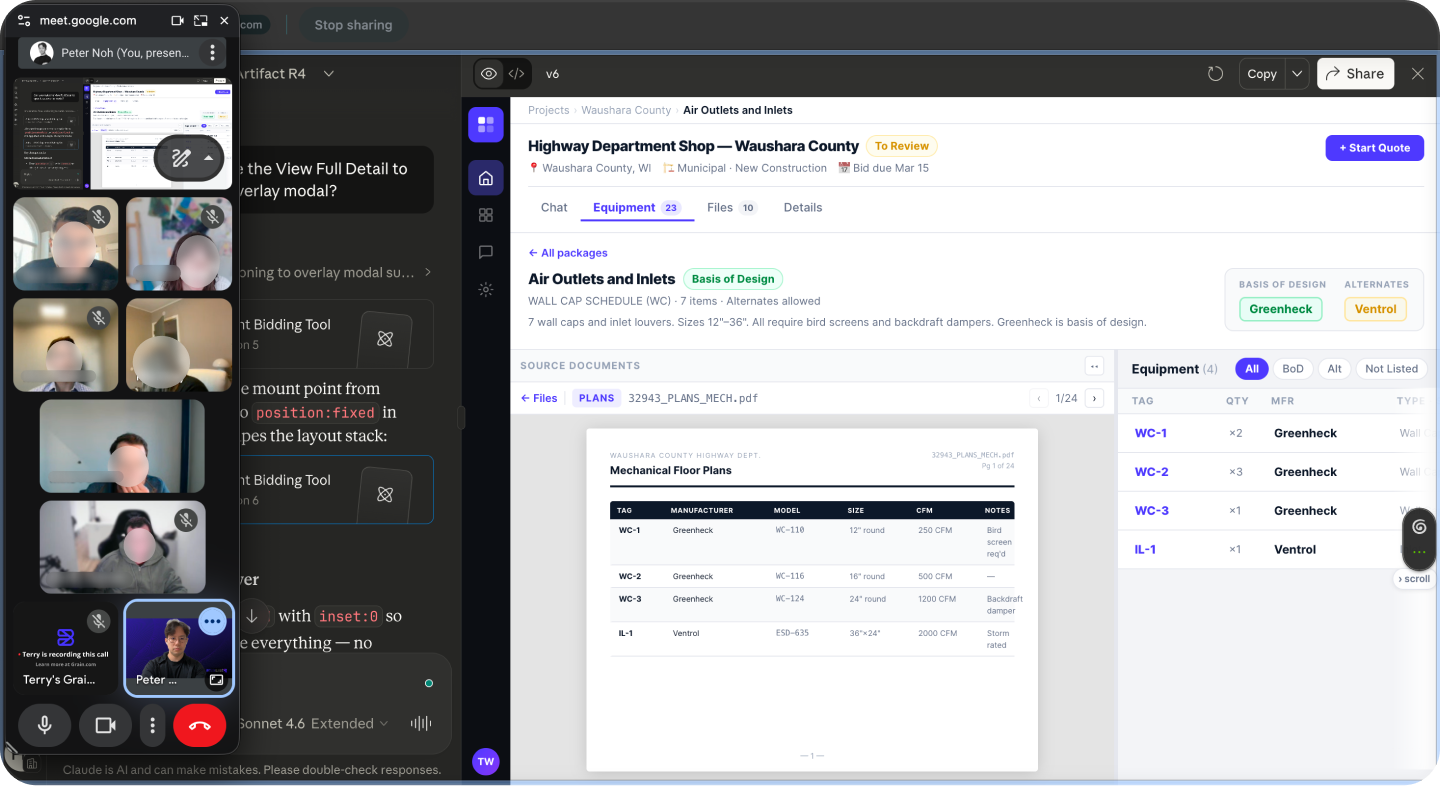
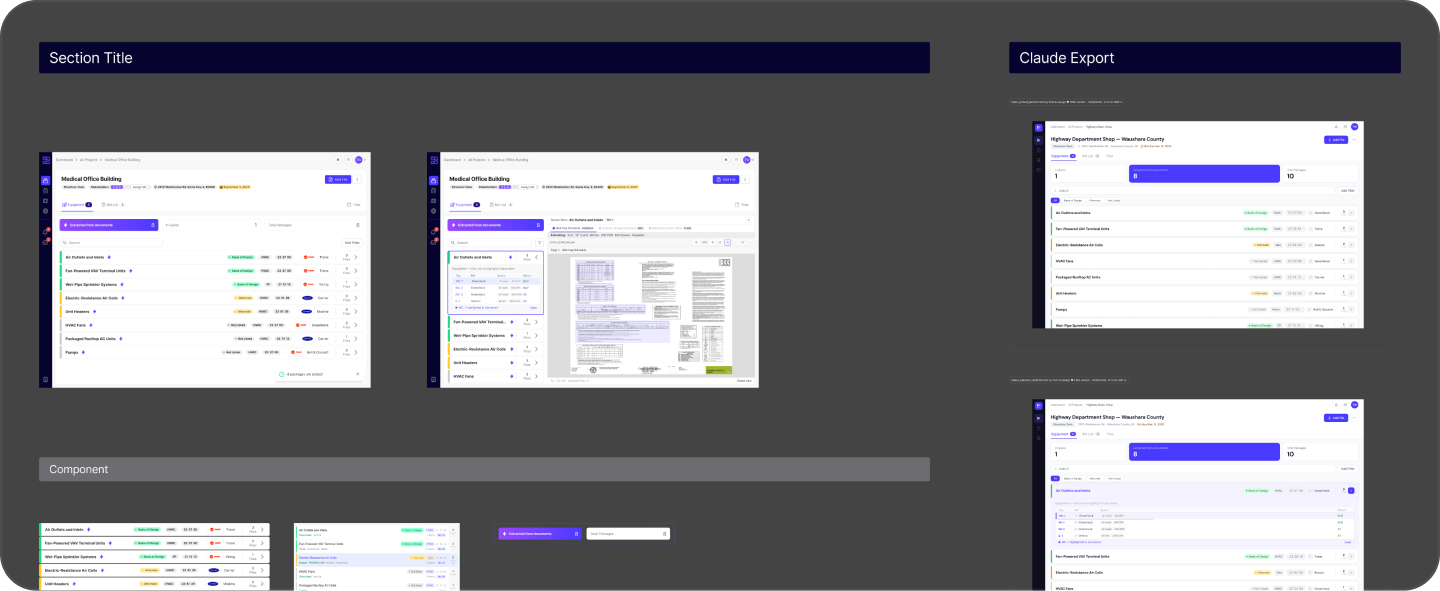
I decided to provide a 1 step to initiate the document intake and extraction process. This required the engineer collaboration in order to make the seamless experience
AI + Design Integration
- Designed human-in-the-loop validation for trust and accuracy
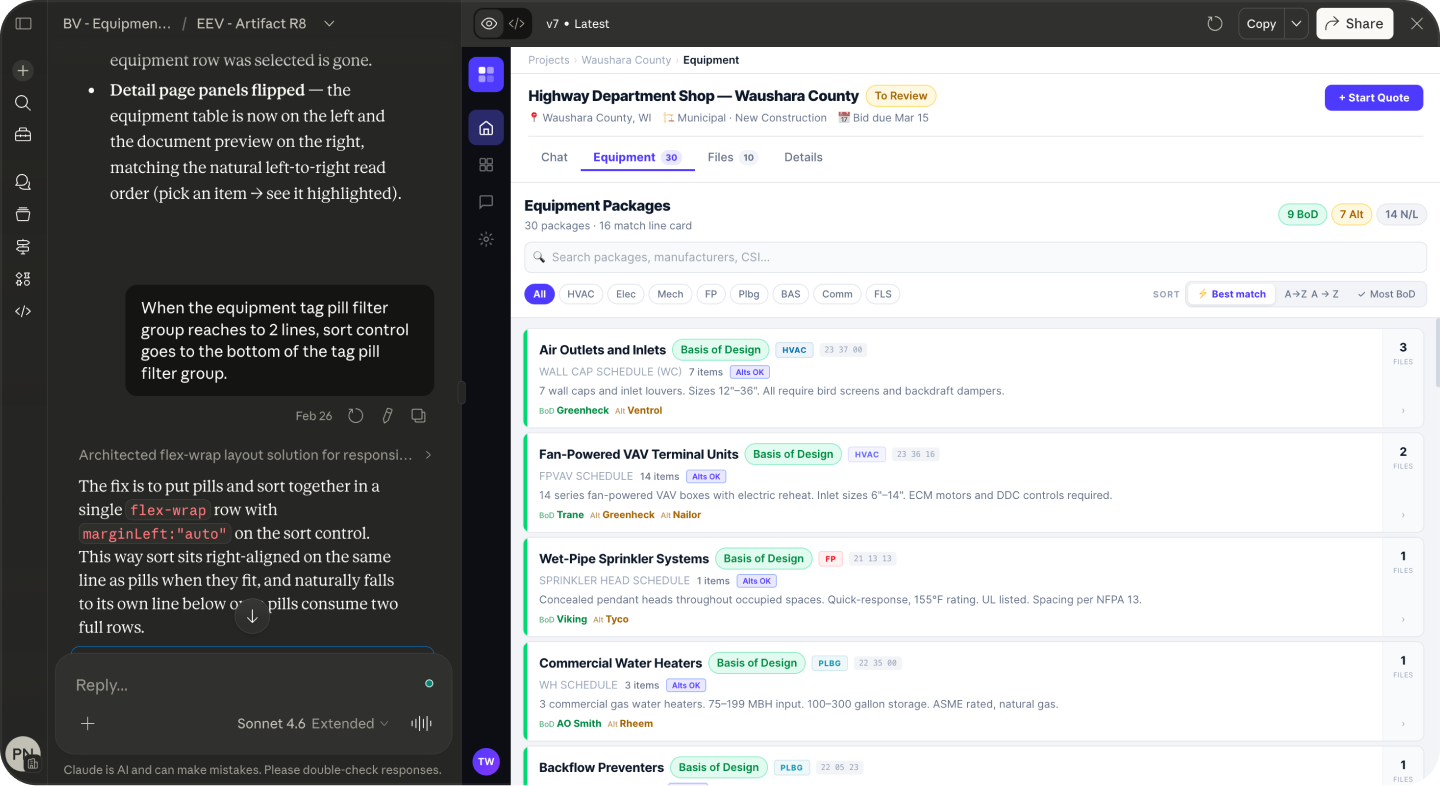
- Used Claude + Figma Design & Make to accelerate prototyping and iteration
Result: Faster delivery and tighter collaboration with engineers
Final Solution
Live Demo
AI-Powered Document Workflow System
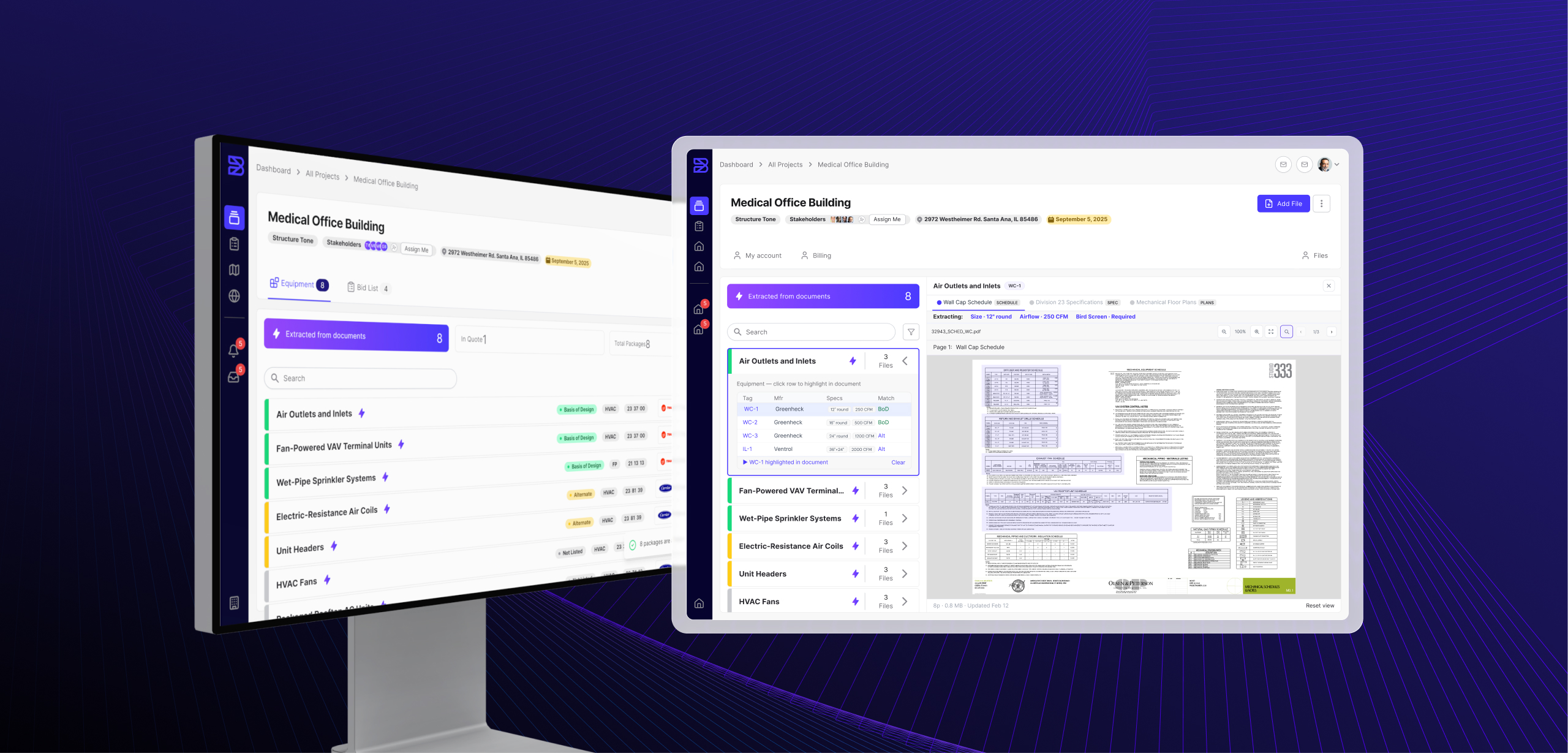
A unified AI-powered workflow that converts raw project documents into structured, validated data—enabling suppliers to move from intake to bid-ready insights in minutes.
Key Features
- Centralized document intake to create a single source of truth
- AI-powered extraction of key scope and specification data
- Structured interface for rapid validation and review
- Direct linkage between extracted data and original sources (drawings, specs)
Outcome
Users can go from document upload → validated insights → bid-ready data in minutes
Impact & Next Steps
This project validated BuildVision's AI capability in procurement by
- Demonstrating 5–10x efficiency gains in document workflows
- Proving scalability across high-volume bidding operations
- Establishing a foundation for AI-driven procurement workflows
Next Steps
- Improve extraction accuracy through feedback loops
- Expand support across more document types and formats
- Introduce predictive insights to support bid decision-making
This work laid the foundation for AI-driven procurement workflows—shifting the process from manual document review to fast, data-driven decision-making at scale.